 How-to
7 Signs of Truly Patient Centered Chiropractic Care
Last Updated: November 2, 2026
Quick Summary
Patient centered chiropractic care is a model where the chiropractor builds treatment around your goals, history, and preferences instead of applying the same routine to every spine. You are treated as a partner in the process, with findings explained and treatment options discussed together before any hands-on care.
- A patient-centered first visit covers full health history, goals, and a physical and neurological exam before treatment.
- Shared decision-making means the chiropractor brings clinical evidence and you bring your values to build the plan.
- An individualized plan sets visit frequency with a stated reason and includes written review points to reassess progress.
- Informed consent is an ongoing conversation covering benefits, risks, and alternatives, not a signature at the front desk.
- A patient-centered chiropractor refers you to another provider when your case falls outside their scope.
Table of Contents
- What Patient Centered Chiropractic Care Actually Means
- What to Expect at a Chiropractic Appointment Built Around You
- Shared Decision-Making in Healthcare and What It Looks Like in Chiropractic
- How an Individualized Chiropractic Care Plan Gets Built
- How Often to Visit a Chiropractor and How Progress Gets Measured
- Safety, Informed Consent, and When to Ask for a Different Approach
- How to Tell Whether a Chiropractor Is Genuinely Patient-Centered
- Booking a Visit That Starts With Your Goals
- Frequently Asked Questions
What Patient Centered Chiropractic Care Actually Means
Patient centered chiropractic care is a model of care where the chiropractor builds treatment around your goals, history, and preferences instead of applying the same routine to every spine.
That distinction matters more than it sounds. A 2025 article in the chiropractic literature describes the profession's historical orientation as hands-on, holistic, and individualized (person-centred care in chiropractic).
Two patients can walk in with identical neck pain and need completely different plans, because their work, stress, sleep, and injury history all shape what will actually help.
How It Differs From a Quick Adjustment and Out the Door
The quick-visit model has a clear shape: you describe the pain, you get adjusted, you leave. It can relieve symptoms. It rarely explains why the problem keeps returning.
A patient-centered visit looks different in a few concrete ways:
- A full health history, not a two-minute intake
- Questions about your daily routine and physical demands
- A clinical assessment matched to your complaint
The core idea is simple. Care should fit the person, not the other way around.
What to Expect at a Chiropractic Appointment Built Around You
A patient-centered first visit typically spends real time on questions before any hands-on treatment.

The First Visit, Step by Step
- Intake and health history. You cover past injuries, current medications, surgeries, and what a normal day looks like for you.
- A conversation about goals. What does "better" mean to you: a full night's sleep, lifting your kid, or finishing a hike without stopping?
- A physical and neurological exam. Range of motion, posture, strength, and nerve function get checked against your specific complaint.
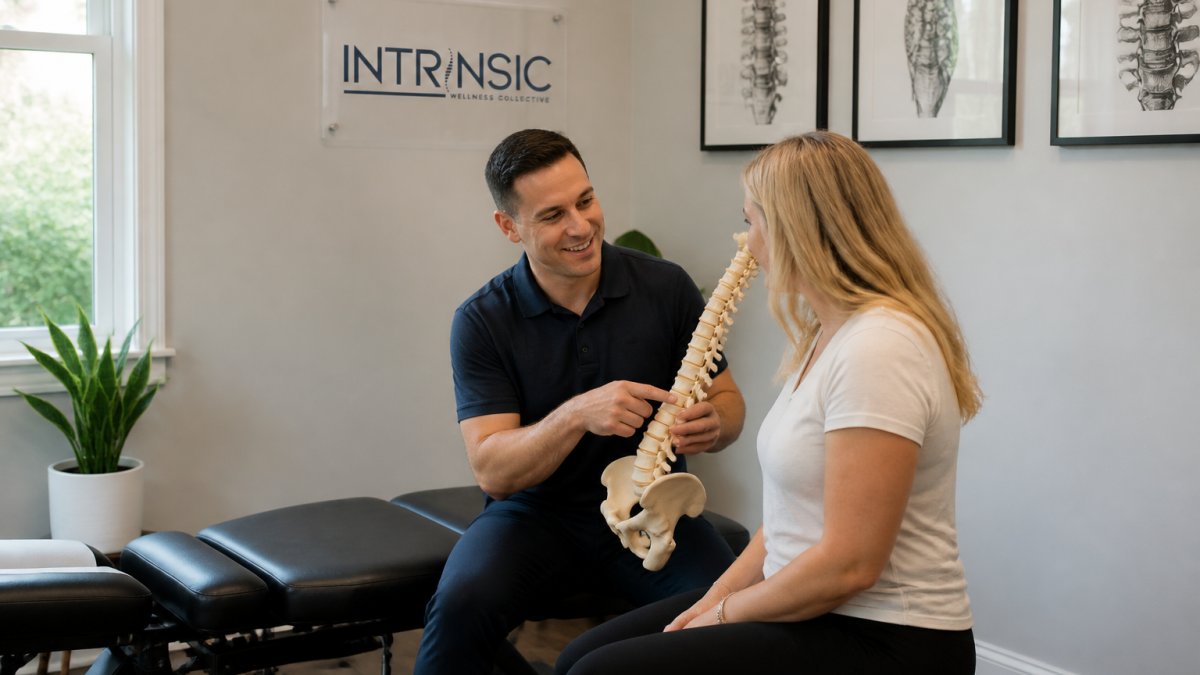
- Findings explained in plain language. You hear what the exam showed and what it likely means.
- A proposed care plan, discussed together. You review options, expected timelines, and what happens if you choose a different route.
That structure supports informed decisions from day one. A 2025 review of state regulator websites examined how informed consent rules apply to chiropractors, which underscores that consent is an ongoing conversation, not a signature at the front desk (guidance on informed consent for chiropractors).
Shared Decision-Making in Healthcare and What It Looks Like in Chiropractic
Shared decision-making in healthcare means the clinician brings the clinical evidence and you bring your values, and the two get combined into a plan you both understand. In chiropractic, that plays out in specific choices: which technique, how often to come in, and when to try something else.
In practice, a patient-centered chiropractor will lay out real options, including ones that do not involve an adjustment:
- Spinal manipulation versus mobilization
- Soft tissue work or massage therapy alongside adjustments
- Adjunctive options like cold laser therapy or Shockwave therapy
You should never feel pushed toward one path. If you ask about alternatives and get a blank stare, that tells you something.
How an Individualized Chiropractic Care Plan Gets Built
An individualized chiropractic care plan starts with your exam findings, then layers in your schedule, your tolerance for hands-on treatment, and your goals. No two plans look the same, and they should not. The difference between a patient-centered plan and a routine one is not the number of visits. It is whether the plan can explain, in plain terms, why each component is there for you.
A few inputs shape the plan:
- Your health history, including prior injuries and conditions that affect what is safe
- Your daily demands, from desk posture to lifting and sport
- Your preferences, including comfort with manual techniques
The Sequence a Patient-Centered Plan Usually Follows
Most practitioners build the plan in a predictable order, and you should be able to see each step happen:
- Findings first. The exam and history produce a working explanation of what is driving your symptoms, not just a label for where it hurts.
- Goals translated into targets. "Better" becomes something measurable, such as sleeping through the night, sitting at a desk for a full workday, or returning to a specific lift or run.
- Treatment options matched to the findings. Manual adjustment, mobilization, soft tissue work, home exercise, and adjunctive therapies are selected because they fit your presentation, not because they are on the clinic's standard menu.
- Dose and frequency set with a reason. The plan states how often visits start, why that cadence was chosen, and when it will be reassessed.
- Review points written in. A date or visit count is set to decide whether the plan is working, needs adjusting, or should stop.
Watch out: a plan that never names a review point is not individualized, because there is no mechanism to change course based on your response.
What Makes the Plan Yours Rather Than the Clinic's
Individualization shows up in the trade-offs. A patient who is uncomfortable with high-velocity manipulation may be offered mobilization or instrument-assisted techniques instead.
A plan you understand is more likely to be a plan you follow. The patient's own perspective belongs in the record, too. A 2026 paper notes that patient-reported outcome measures add patient-centered data that complements objective clinical findings (chiropractors' use of patient-reported outcome measures).
Questions That Reveal Whether a Plan Is Truly Individualized
Ask these before you agree to a course of care:
- What in my exam led you to this specific approach?
- What would you recommend if I preferred not to have manual adjustments?
- How many visits are we planning before we reassess, and what has to change for the plan to continue?
If the answers are specific to your exam and your goals, the plan is individualized. If they could be copied onto any patient's chart, it is not.
How Often to Visit a Chiropractor and How Progress Gets Measured
Visit frequency depends on your condition, your response to care, and your goals, so any clinic quoting one fixed schedule for everyone is guessing. Early on, visits tend to be closer together. As symptoms settle, they usually space out.
Progress should be tracked, not assumed. Useful markers include:
- Pain scores you report yourself
- Range of motion and strength changes
- How well you sleep and move through your day
Ask two questions at every check-in: are we hitting the goals we set, and what is the plan if we are not? If the answer to the second one is "more visits," press for specifics. If cost is on your mind before you commit, our chiropractic care page explains what a plan involves.
Safety, Informed Consent, and When to Ask for a Different Approach
Chiropractic care involves some risk for some people, and a chiropractor should discuss it openly. Soreness after an adjustment is common and usually short-lived. Rare but serious complications exist with certain techniques, which is exactly why screening comes first. Most practitioners treat safety as a routine part of the visit rather than a one-time warning, and you should expect it to be revisited whenever your history or symptoms change.
What Screening Should Cover Before Any Treatment
A patient-centered chiropractor screens before recommending care, and the screening is specific to you rather than a checkbox. Expect questions about:
- Prior injuries, surgeries, and current medications, including blood thinners
- Bone health, including any history of osteoporosis or fractures
- Red-flag symptoms such as unexplained weight loss, fever, night pain, or progressive weakness
A provider who adjusts without asking about your health history, medications, or red-flag symptoms has skipped an important safety step.
How Informed Consent Works in Practice
Informed consent means you understand the benefits, the risks, and the alternatives before you agree. In a patient-centered practice, it is a conversation that continues across visits, not a signature at the front desk. You should hear, in plain language:
- What the proposed treatment is intended to do
- What the realistic benefits and timelines are
- What the known risks are, including soreness and rare serious events
Ask questions until it is clear.
When Chiropractic Care Is Not the Right Next Step
Some symptoms call for a different kind of care entirely. Tell your chiropractor, and consider seeing a physician, if you have:
- New numbness, weakness, or loss of bladder or bowel control
- Severe pain after a fall or accident
- Unexplained weight loss, fever, or night pain
A patient-centered chiropractor should say so directly when your case is outside their scope and help you get to the right provider.
How to Raise a Safety Concern
If something does not feel right, say so before the next adjustment. Describe what changed, when it started, and what makes it better or worse. A provider who listens, adjusts the plan, or refers you out is demonstrating patient-centered care in the moment that matters most.
How to Tell Whether a Chiropractor Is Genuinely Patient-Centered
You can often spot a patient-centered practice before your first adjustment, in how the office runs.
A practical checklist to run through:
- The intake asks about your goals, not just your pain
- The provider explains findings before recommending treatment
- You are offered options, including non-adjustment approaches
Compassion and clear communication are clinical skills, not bedside extras. You can also learn about our practice and approach to see how we put this into action. If a provider rushes you or dismisses your questions, the care is not patient-centered no matter what the website says.
Run through this checklist to judge whether a practice is genuinely patient-centered.
| Sign | What to look for |
|---|---|
| Intake | Asks about your goals, not just your pain |
| Findings | Explained before treatment is recommended |
| Options | Offered, including non-adjustment approaches |
| Risks | Risks and alternatives discussed without you asking |
| Plan | Includes review points and an exit strategy |
| Concerns | You feel heard when you raise one |
| Scope | Provider refers out when your case is outside their scope |
Booking a Visit That Starts With Your Goals
The first step is a conversation, not an adjustment. You should leave your first visit understanding what is going on, what your options are, and what a reasonable timeline looks like.
At Intrinsic Wellness Collective, our team brings over 19 years of clinical experience and a natural, holistic treatment approach, with trauma-informed care and nervous system regulation available for patients who need it.
Ready to start with your goals instead of a generic routine? Contact us to learn more.
Frequently Asked Questions
What does it mean to be patient-centered in chiropractic care?
It means your preferences, values, and personal goals shape every decision, not just the adjustment itself. A patient centered chiropractic visit starts with a full health history and a conversation about what you want to get back to doing. The chiropractor explains findings in plain language, offers treatment options, and asks for your consent before proceeding. Person-centered care in chiropractic is commonly described as a hands-on, holistic, and individualized approach.
How often should you visit a chiropractor?
There is no universal schedule. A patient-centered approach ties visit frequency to your specific presentation, response to care, and goals, then reviews that plan at set checkpoints. Someone with an acute flare may be seen more frequently at first and taper down, while a maintenance patient may come in far less often. Ask for the recommended frequency in writing, what milestone would trigger a change, and what signs would mean care should stop or shift. That transparency is a hallmark of individualized chiropractic care.
Can I choose whether to receive a chiropractic adjustment?
Yes. Informed consent means you can decline any technique and still receive care. A patient-centered chiropractor should walk you through treatment options, including alternatives such as soft tissue work, cold laser therapy, spinal decompression, or a referral to another provider, along with the risks and benefits of each. A 2025 review of state regulator websites examined how informed consent guidance for chiropractors varies, so ask directly how consent is documented at the practice you are considering.
What questions should I ask a chiropractor before starting care?
Ask what the exam will include, what the working diagnosis is, which treatment options exist and why one is recommended, what the expected timeline looks like, and how progress will be measured. Also ask about out-of-pocket costs if you are self-pay, since insurance coverage for chiropractic varies by plan. Finally, ask what would make the chiropractor refer you elsewhere. A clinician who welcomes these questions, and answers them without pressure, is showing you shared decision-making in healthcare rather than talking at you.
Your spine does not need a one-size-fits-all script, and neither does your care. Intrinsic Wellness Collective offers individualized care plans, cold laser therapy, spinal decompression, and trauma-informed treatment built around what you actually want to get back to. Get started with Intrinsic Wellness Collective and take an active role in your own healing.