 How-to
Nervous System Regulation for Pain: 7 Steps That Help
Quick Summary
Nervous system regulation for pain means calming the body's threat response so the brain sends less pain signal. Your nervous system shapes how loud pain feels, and stress, tension and guarding can keep it elevated even after tissue heals. Simple practices like slow breathing and body scans may help.
- Your nervous system decides how loud a pain signal feels, even after tissue has healed.
- A longer exhale than inhale is the active ingredient in the slow breathing practice.
- Try the 4-in, 6-out breathing pattern for two to three minutes.
- Start with two minutes of slow breathing each morning and build up over four weeks.
- Seek professional care if pain is severe, worsening, or comes with numbness or weakness.
Table of Contents
- Nervous System Regulation for Pain: 7 Steps That Help
- How the Nervous System Shapes the Pain You Feel
- Pain and the Autonomic Nervous System
- Sympathetic Nervous System and Chronic Pain
- The Parasympathetic Nervous System and Recovery
- Nervous System Regulation Exercises for Pain You Can Try Today
- Tracking Your Symptoms and Setting Realistic Expectations
- When to See a Professional and Booking Your Next Step
- Frequently Asked Questions
Nervous System Regulation for Pain: 7 Steps That Help
Last Updated: November 14, 2026
How the Nervous System Shapes the Pain You Feel
Pain is not just a signal from a sore spot. Your nervous system decides how loud that signal feels, and it can turn the volume up long after the tissue has healed. That is why nervous system regulation for pain has become a serious topic for people with ongoing aches. Stress, posture and daily habits can all keep the alarm running.
A pain signal travels from the body to the brain and spinal cord (ncbi.nlm.nih.gov). The brain then decides how much threat to feel. Research on pain increasingly examines pain, pain catastrophizing and autonomic nervous system activity together, which shows how closely these systems are linked (pubmed.ncbi.nlm.nih.gov).
Pain is shaped by more than tissue damage. Sleep, stress, fear of movement and autonomic balance all play a role, so calming the system may matter alongside treating the sore area.
Pain and the Autonomic Nervous System
The autonomic nervous system runs the things you do not think about, like heart rate, breathing and muscle tension. It also shapes how pain is felt. A PubMed Central review on pain and the autonomic nervous system describes how acute pain can raise breathing rate, increase muscle tension and change skin conductance. The same review describes how parasympathetic activation may reduce pain.
Some of the research points in a surprising direction. Chronic pain does not always mean a system stuck in overdrive. Some research suggests chronic pain states may involve blunted autonomic reactivity to painful or stressful stimuli. The picture is more complicated than "too much alarm," and it is why a single explanation rarely fits everyone.
- Breathing rate and muscle tension often rise during acute pain
- Chronic pain may change how the system responds to stress
- Balance between the two branches matters more than either one alone
Sympathetic Nervous System and Chronic Pain
The sympathetic nervous system drives the fight-or-flight response. In short bursts, it helps you react to danger. When it stays switched on, it can keep muscles guarded and senses on high alert. Over time, that state can make ordinary movement feel threatening.
Many people with chronic pain notice this pattern. They tense up before a task, brace during a stretch, and stay on guard after the pain has eased. This is one reason nervous system regulation for pain focuses on calming the body, not only treating the sore spot.
Why Threat Responses Keep Pain Going
A threat response tells the brain that something is dangerous. Once that message repeats, the brain may keep producing pain even when the tissue is healing. This is sometimes called pain sensitivity, and it can make even light touch or movement uncomfortable.
The cycle often looks like this:
- A flare-up triggers worry about movement
- Muscles tighten and breathing gets shallow
- The brain reads the tension as more threat
- Pain feels stronger, and the cycle repeats
Breaking this loop does not happen overnight. It usually takes steady practice and patience.
Where the Vagus Nerve Fits In
The vagus nerve is a major pathway between the brain and the body's organs. It is part of the parasympathetic system and helps slow the body down after stress. Researchers are still studying how it may influence pain and inflammation, so the evidence is promising but not final.
Slow breathing is one of the simplest ways to engage this system. Longer exhales are often linked with a calmer state. This is an area where realistic expectations matter. Breathing practice may help some people feel more settled, but it is not a cure on its own.
The Parasympathetic Nervous System and Recovery
The parasympathetic nervous system supports rest, digestion and repair. When it is more active, the body tends to feel safer and less braced. That shift can make recovery easier to reach.
Many people find that calming practices help them sleep better and move with less fear. Research into mind-body approaches for chronic pain has grown in recent years. Mind-body approaches are increasingly discussed as additions to rehabilitation plans for chronic pain.
Balance is the goal, not constant calm. A healthy system can shift between effort and rest without getting stuck in either one.
Nervous System Regulation Exercises for Pain You Can Try Today
Simple practices can help you practice nervous system regulation for pain at home or at work. Start small, and stop if anything increases your pain. Check with a qualified professional if you have a diagnosed condition or new symptoms.
Slow Breathing and Body Scans
Slow breathing and body scans are two of the easiest starting points.
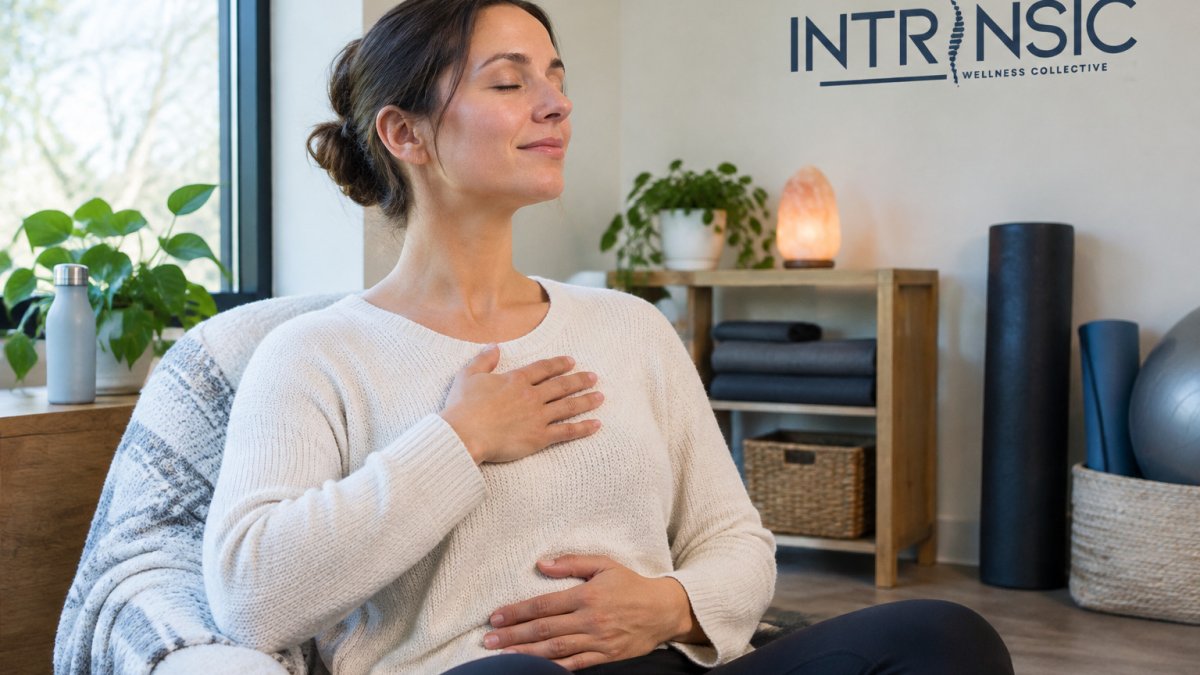
- Sit comfortably and place one hand on your belly.
- Breathe in through your nose for a count of four.
- Breathe out slowly for a count of six.
- Repeat for two to three minutes.
- Then scan your body from head to toe, noticing tension without trying to fix it.
A longer exhale than inhale is the active ingredient here. A longer exhale than inhale is a common starting point; if a given count feels strained, shorten both counts and keep the exhale longer than the inhale. Watch out: if slow breathing makes you dizzy, lightheaded, or more anxious, stop and return to your normal breathing pattern, breathwork is not a good fit for everyone on the first try.
Adapting Practices to Your Body and Setting
Standard yoga and meditation instructions assume a level of mobility and sensory tolerance that many people with pain do not have on a given day. The table below shows how to adapt the same practices without leaving your chair or bed.
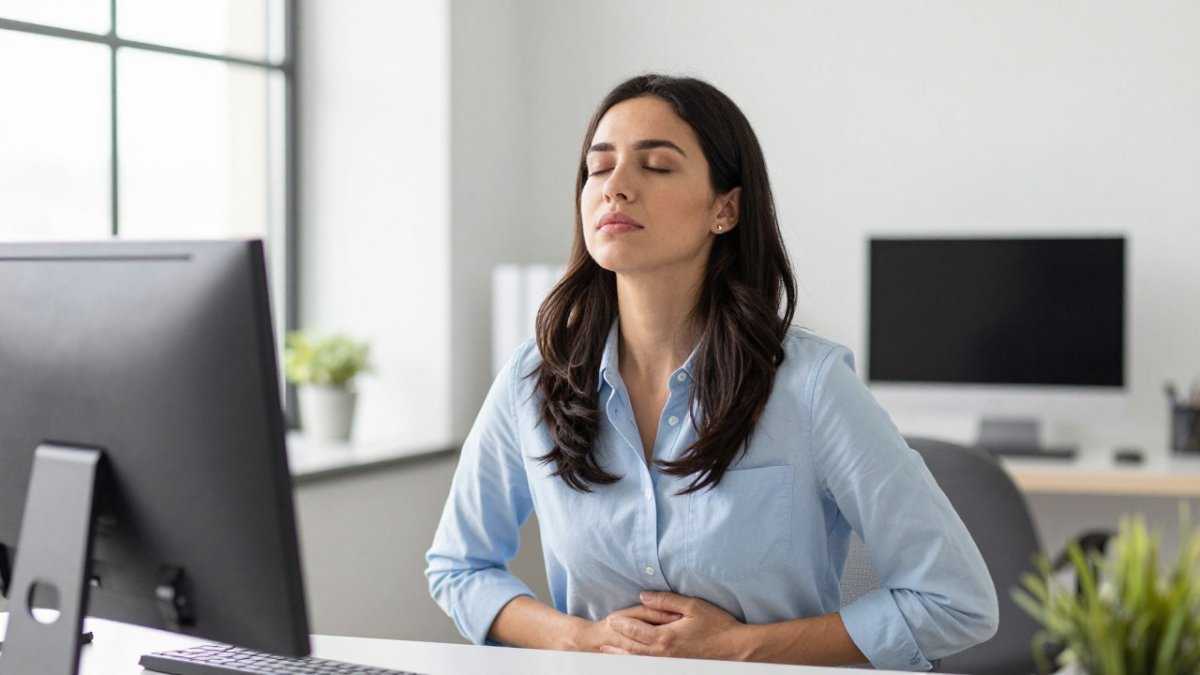
- Seated breathwork: Sit in a firm chair with feet flat and back supported. Use the 4-in/6-out pattern for two minutes. This works at a desk, in a waiting room, or during a commute.
- Bed-based body scan: Lie on your back with knees supported by a pillow. Move attention from feet to head over five to ten minutes, pausing at any area that feels guarded. No movement is required.
- Low-mobility movement: Try a gentle seated spinal twist or shoulder roll for 30 to 60 seconds, staying well inside your comfortable range. The goal is to signal safety to the nervous system, not to stretch.
- Sensory-sensitive options: If sound or silence is uncomfortable, use a single familiar audio track at low volume, dim the lights, or practice with eyes open. Reduce input rather than adding more.
Building a Gradual Daily Routine
A short routine you can repeat is more useful than a long session you skip. Build up slowly over several weeks.
- Week one: two minutes of slow breathing each morning
- Week two: add a short body scan at lunch
- Week three: add gentle movement you already tolerate
- Week four: review what helped and adjust
If pain rises sharply during a practice, ease off. Progress should feel manageable.
Contraindications and When to Pause
Breathwork and movement are low-risk for most people, but they are not appropriate in every situation. Pause and consult a clinician if you have uncontrolled asthma or panic disorder that worsens with breath focus, recent surgery or fracture near the area you are moving, or a history of dissociation during body-focused practices. Watch out: chest pain, fainting, or new neurological symptoms during any practice warrant urgent medical evaluation, not a longer session.
Combining Self-Management With Clinical Care
Regulation skills work best as part of a broader plan. Other qualified professionals, such as physical therapists or psychologists, may also be part of a broader plan. If you take medication for pain, keep your prescriber informed about new practices. Bring your tracking notes (see the next section) to appointments so your provider has specific examples to review.
Here is a quick reference for adapting the practices to your body and setting.
| Practice | Best for | Key detail |
|---|---|---|
| Seated breathwork | Desk, waiting room or commute | 4-in, 6-out for two minutes |
| Bed-based body scan | Low mobility days | Five to ten minutes, no movement required |
| Low-mobility movement | Staying within comfortable range | Hold 30 to 60 seconds |
| Sensory-sensitive options | Sound or light discomfort | Reduce input rather than add more |
Tracking Your Symptoms and Setting Realistic Expectations
Tracking helps you see patterns that memory often misses. Note your pain level, sleep quality, stress and which practices you used each day. After two to four weeks, look for trends. You may find that certain routines help on some days and not others.
Realistic expectations matter. Regulation practices are one tool among several. Timelines vary between people, and evidence quality also varies. Treat the research as a guide, not a guarantee.
When to See a Professional and Booking Your Next Step
Seek professional care if pain is severe, getting worse, or accompanied by numbness, weakness, fever or unexplained weight loss. A qualified professional can check for conditions that self-care cannot address, and can help combine self-management with clinical treatment.
If you want hands-on support, you can book a visit at Intrinsic Wellness Collective to talk through your symptoms and options. You can also contact Intrinsic Wellness Collective directly to ask about your specific situation.
Frequently Asked Questions
Can a dysregulated nervous system be fixed?
Nervous system dysregulation is generally understood as a pattern that can shift with consistent practice, not a permanent fault. Research on chronic pain increasingly points to changes in how the central nervous system processes signals, and some mind-body approaches are being integrated into rehabilitation. Results vary between people, and evidence on specific techniques is still developing. A licensed clinician can help you judge whether regulation practices fit your situation alongside any other care you receive.
How does the autonomic nervous system affect pain?
The autonomic nervous system controls involuntary functions such as heart rate, breathing and muscle tension. Research describes autonomic responses to acute pain, including increased respiratory rate, muscle tension and electrodermal activity, and discusses possible pain reduction through parasympathetic activation. Other research suggests chronic pain may involve autonomic dysregulation and blunted reactivity to stressful stimuli, so the relationship is not a simple one of overactivity. Your provider can help you interpret how this applies to you.
Can breathing exercises help with chronic pain?
Slow breathing is one of the most accessible nervous system regulation exercises for pain. Slower, longer exhales are associated with parasympathetic activity, which may ease muscle tension and feelings of threat. Breathing practices are generally low risk, but they work best as one part of a broader plan that includes movement and professional care, rather than as a standalone cure. Stop and seek advice if a technique increases your pain or causes dizziness.
What is the difference between the sympathetic and parasympathetic nervous systems?
The sympathetic nervous system prepares the body for action by raising heart rate, breathing rate and muscle tension. The parasympathetic nervous system supports rest and recovery by slowing these functions down. In chronic pain, the balance between the two may shift, which is one reason regulation practices focus on encouraging parasympathetic activity. Both systems are necessary, and the goal is flexibility between them rather than eliminating either.