 How-to
How to Use Chiropractic Adjustments for Sports Injuries
Last Updated: November 12, 2026
Quick Summary
Chiropractic adjustments help restore normal joint movement and can ease muscle tension after a sports injury, and they work best as one part of a plan that includes assessment, exercise and a return-to-play timeline. Research cited in the article shows chiropractic care is effective for common athletic conditions such as lower back pain and muscle strain.
- Seek a chiropractor if pain lasts more than a few days after training or a game.
- Sudden numbness, weakness or loss of bladder or bowel control needs urgent medical care first.
- A good first visit includes questions and a hands-on movement check before any adjustment.
- Ask your provider how progress will be measured and what the plan's goals are.
- Return to sport only when you can move the area without sharp pain and train without lingering swelling.
Table of Contents
- How Chiropractic Adjustments Support Sports Injury Recovery
- Step 1: Recognize When to See a Chiropractor for a Sports Injury
- Step 2: Get a Movement and Injury Assessment
- Step 3: Understand a Chiropractic Treatment Plan for Athletes
- Step 4: Add Sports Injury Recovery Exercises
- Step 5: Plan Your Return to Play and Coordinate Care
- Frequently Asked Questions
Sports injuries rarely heal on their own schedule, and many athletes wonder whether chiropractic adjustments for sports injuries can help them recover faster. Intrinsic Wellness Collective, a holistic practice in Central Virginia, sees this question often. Chiropractic care is effective in treating common athletic conditions including lower back pain and muscle strain, according to research published through the NCBI article on integrating chiropractic into athletic care. That is a useful starting point, but it is not the whole story. This guide explains how adjustments fit into recovery, when to seek care, and what a realistic plan looks like.
How Chiropractic Adjustments Support Sports Injury Recovery
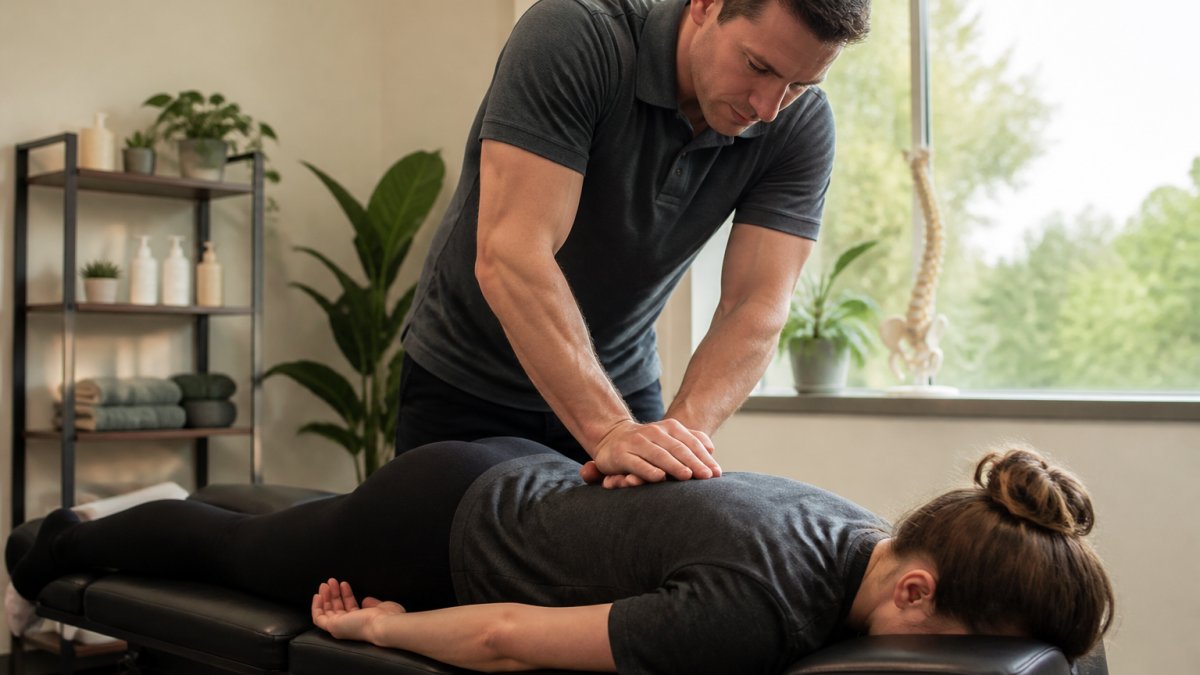
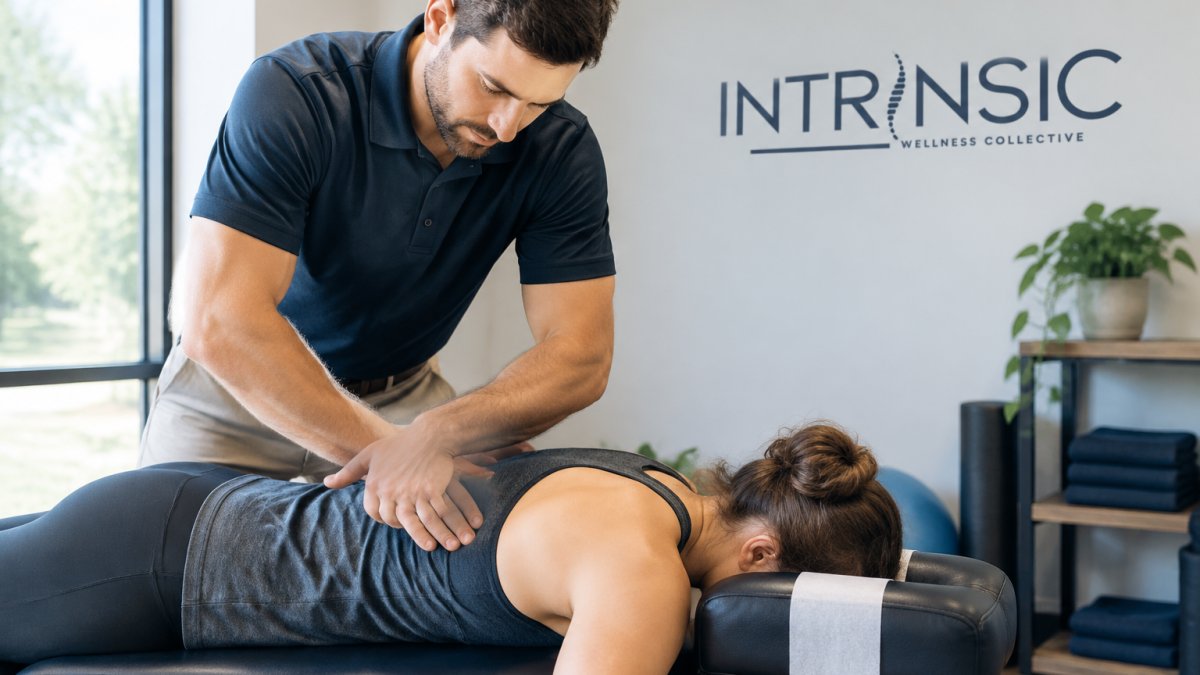
Chiropractic adjustments aim to restore normal movement in the joints and reduce strain on the surrounding muscles. Think of a joint that is stuck or sluggish after a hard fall or a repeated stress injury. A gentle, targeted adjustment can help the joint move the way it should again.
Restoring Joint Alignment and Mobility
When a joint loses its normal range of motion, the body often compensates. Other muscles take on extra work, and that extra load can lead to new pain elsewhere.
Adjustments focus on restoring joint movement so the whole body moves more evenly.
Reducing Pain, Muscle Tension and Spasms
Pain and muscle tension often feed each other. A sore joint makes muscles tighten, and tight muscles pull on the joint. Breaking that cycle can bring real relief.
Some patients notice reduced spasms after a session, though responses vary from person to person. Adjustments are one part of a plan, not a standalone cure.
What the Evidence Actually Supports
It helps to separate what is well established from what is still being studied. Ask your provider to distinguish between what is supported by research and what is clinical experience, and treat any promise of a fixed recovery timeline with caution.
How Adjustments Fit With the Rest of Your Care
If a provider proposes adjustments alone, with no exercise plan and no reassessment schedule, that is a signal to ask how progress will be measured.
Share of athletes using chiropractic care and injury reduction
Step 1: Recognize When to See a Chiropractor for a Sports Injury
Not every sore muscle needs a chiropractor. Knowing when to book a visit helps you avoid waiting too long or treating a serious problem at home.
Consider scheduling a visit when:
- Pain lasts more than a few days after a training session or game
- A joint feels stiff, locked or unstable
- You notice reduced range of motion compared to the other side
- Pain keeps returning after rest and basic care
- Your performance drops because of an old or nagging injury
Watch out: Sudden numbness, weakness, severe headache, loss of bladder or bowel control, or pain after a major impact needs urgent medical care before any chiropractic visit. Go to an emergency room or call a doctor first.
Step 2: Get a Movement and Injury Assessment
A good first visit starts with questions, not an adjustment. Your provider should ask how the injury happened, what hurts, and what activities you want to get back to.
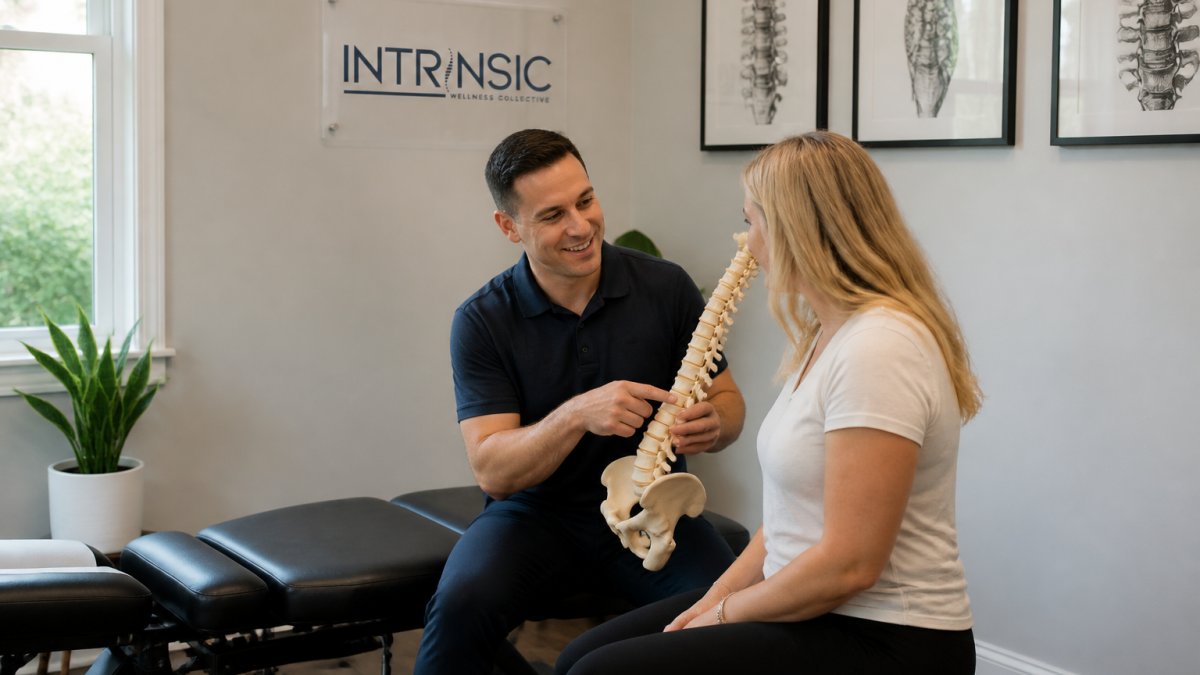
Expect a hands-on movement check. The provider may watch how you bend, twist and reach, and test how your joints move. This helps identify which area needs attention and whether adjustments are appropriate.
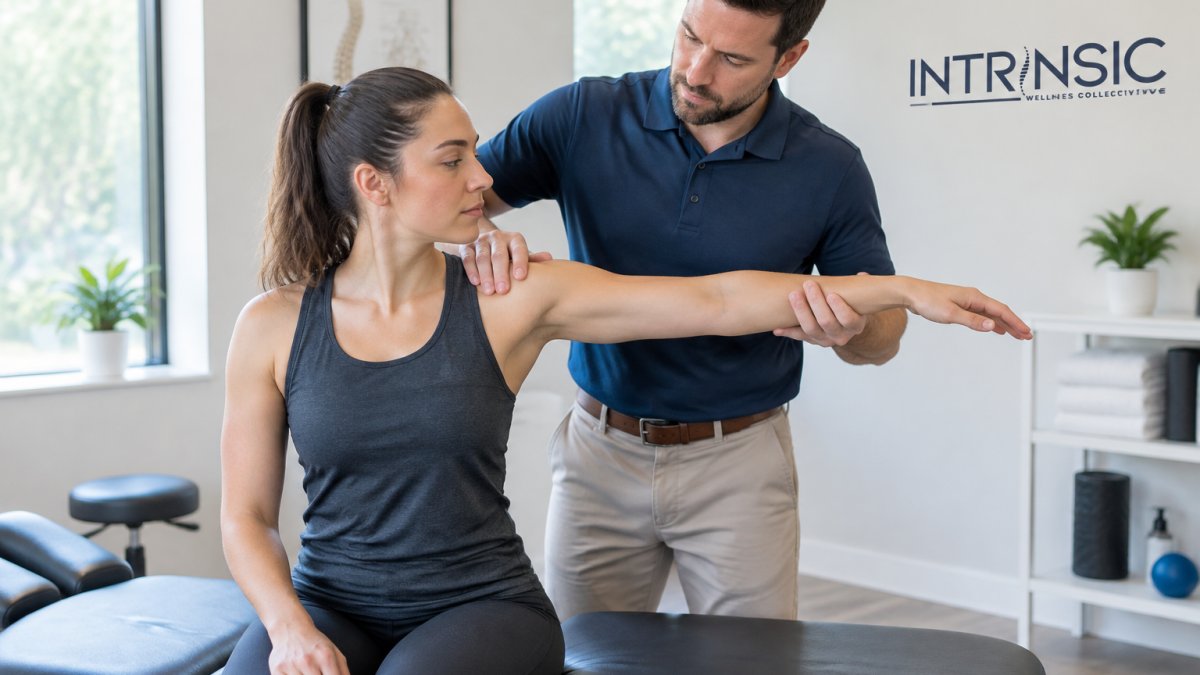
If the assessment points to a problem outside chiropractic scope, such as a fracture or torn ligament, you should be referred for imaging or to a physician. Honest referral is part of responsible care.
Step 3: Understand a Chiropractic Treatment Plan for Athletes
A sound plan has clear goals, a rough timeline and a way to measure progress. Ask your provider what they expect to change and how you will know it is working.
Visit frequency depends on the injury, your goals and your schedule. Intrinsic Wellness Collective offers a range of services, including chiropractic adjustments, massage therapy and spinal decompression, so your plan can combine several approaches. Pricing depends on the services chosen and the number of visits, so contact the clinic directly for current rates. (Source: urgent medical care)
Techniques You May Encounter
Sports-focused chiropractic care draws on several techniques, and the choice should match the injury and your comfort level. Common approaches include diversified manual adjustment (the familiar hands-on thrust), instrument-assisted adjustment using a spring-loaded tool, mobilization that moves a joint through its range without a thrust, and soft tissue methods such as active release or myofascial work. Some practitioners also use traction or spinal decompression for disc-related complaints. Ask which technique is being used and why; a plan that names the technique and the target tissue is easier to evaluate than a vague promise to "realign" you.
A Typical Visit Cadence and Reassessment
A common pattern is a short course of more frequent visits early on, often one to three per week for two to four weeks, followed by a taper as symptoms settle and you take on more self-directed exercise. Reassessment should be built in, not assumed: expect your provider to recheck range of motion, strength, and sport-specific movements at set intervals and to change the plan if you are not improving. If you see no meaningful change after a few weeks of consistent care, that is a reason to revisit the diagnosis or add another clinician, not to simply add visits.
Risks, Contraindications, and Informed Consent
Adjustments are generally low-risk when performed by a trained provider after a proper assessment, but they are not appropriate for everyone. Manipulation should be avoided or modified in cases of suspected fracture, unstable joint, severe osteoporosis, active infection, or certain neurological conditions, and cervical manipulation warrants extra caution. Your provider should explain these risks and confirm your consent before treatment begins. If a provider dismisses your questions about risk or pushes treatment without an assessment, seek a second opinion.
Coordinating With the Rest of Your Care Team
Chiropractic care works best as part of a broader plan. Share your chiropractic plan with your physician, athletic trainer, or physical therapist so everyone is working from the same assessment and return-to-play criteria. Coordinated care reduces the risk of conflicting advice, helps catch problems outside chiropractic scope, and keeps everyone tracking the same progress markers.
The article outlines several techniques a sports-focused chiropractic plan may draw on, so here is a quick overview.
| Technique | What it involves | Common use |
|---|---|---|
| Diversified manual adjustment | Familiar hands-on thrust | Joint alignment and mobility |
| Instrument-assisted adjustment | Spring-loaded tool | Targeted joint adjustment |
| Mobilization | Moves a joint through its range without a thrust | Stiff or sluggish joints |
| Soft tissue methods | Active release or myofascial work | Muscle tension |
| Traction or spinal decompression | Gentle pulling force on the spine | Disc-related complaints |
Step 4: Add Sports Injury Recovery Exercises
Movement and exercise are often part of a broader plan alongside care.
Pain that spikes sharply during an exercise is a sign to reduce intensity and check with your provider.
Step 5: Plan Your Return to Play and Coordinate Care
Returning to sport too early is one of the most common reasons injuries come back. A clear return-to-play plan protects your progress.
Before going back to full training, you should be able to:
- Move the injured area through its normal range without sharp pain
- Perform sport-specific movements at reduced intensity without symptoms
- Complete full training sessions without swelling or lingering soreness the next day
If you have a physician, athletic trainer or physical therapist involved, share your chiropractic plan with them. Coordinated care reduces the risk of conflicting advice and helps everyone track your progress.
Intrinsic Wellness Collective, led by Dr. Lee Matthis, works with patients to build individualized care plans and keep them informed about their options. You can reach the clinic through its website to ask about scheduling and next steps.
Frequently Asked Questions
Can a chiropractor help with sports injuries?
A chiropractor can help with many sports-related problems, including muscle strains, sprains and joint stiffness that limits movement. Chiropractic adjustments aim to restore joint alignment and mobility, and they are often combined with soft-tissue work and rehabilitation exercises. Results vary by injury, so a qualified provider should assess your condition first. Severe injuries, fractures or suspected ligament tears need evaluation by a physician before any manual treatment begins.
When should an athlete seek medical care instead of chiropractic treatment?
Seek urgent medical care for severe pain, visible deformity, inability to bear weight, numbness, weakness, loss of bladder or bowel control, or a head injury with confusion or vomiting. Swelling that rapidly worsens or pain that does not improve should also prompt a doctor visit. Chiropractic care is generally a conservative option for musculoskeletal problems and works best as part of a coordinated plan with your primary care provider or sports medicine physician.
When should you not get adjusted by a chiropractor?
Do not receive spinal manipulation if you have a fracture, suspected instability, active infection, unexplained fever, or a condition that weakens bone such as osteoporosis or cancer. People taking blood thinners should tell their provider before treatment. Pregnant patients and anyone with recent surgery should check with their physician first. A chiropractor should screen for these conditions at the first visit and refer you elsewhere when needed.
How many chiropractic visits does a sports injury usually need?
Visit frequency depends on the injury, its severity and how long it has been present. Many providers begin with several visits per week and then taper as movement and pain improve. Pricing depends on the visit type, the services included and your insurance coverage, so check with Intrinsic Wellness Collective directly for current rates or a quote. Ask at your first visit how progress will be measured so you know when to reassess the plan.